Article
The self-care generation
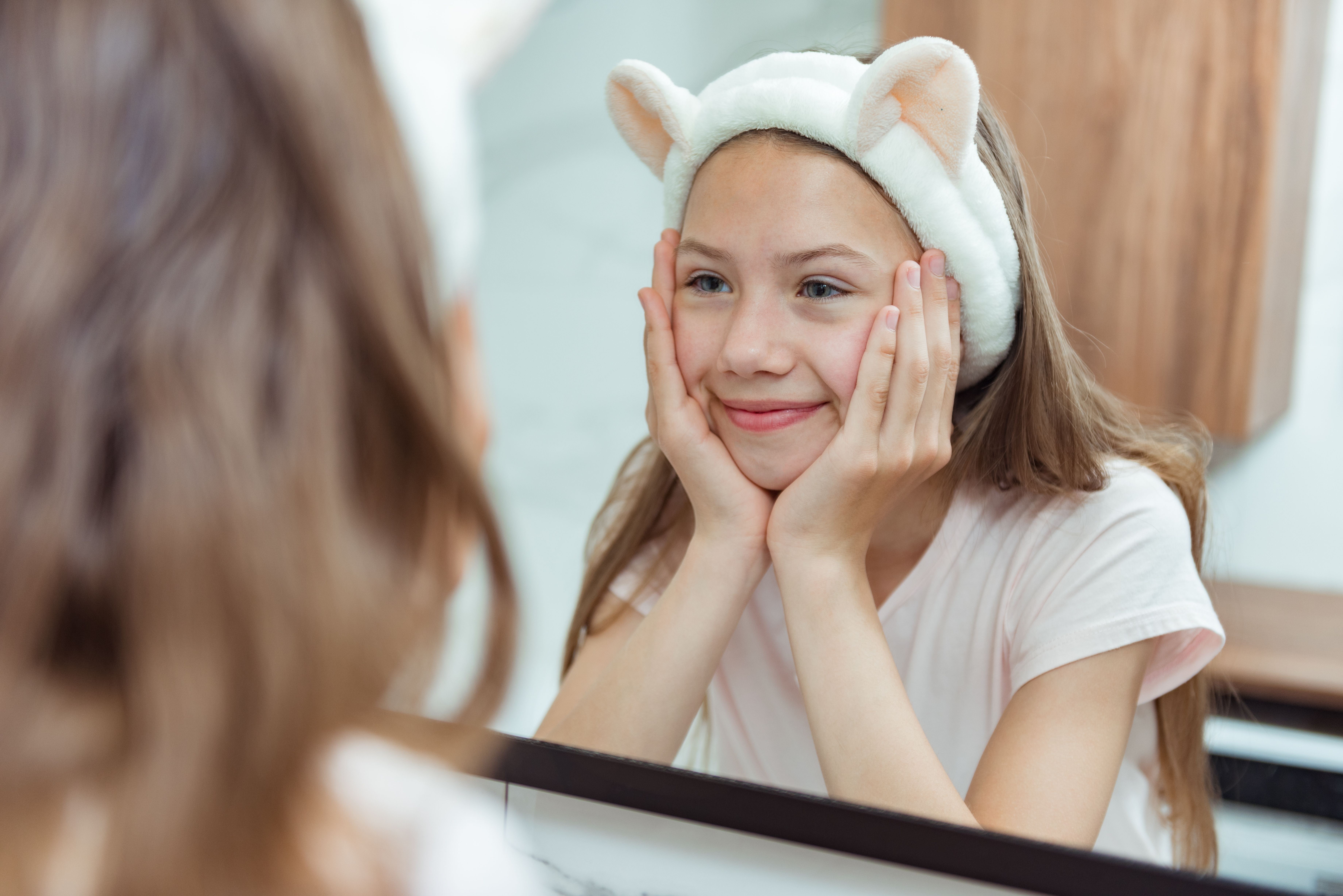
Kids in the UK settle their beauty loyalties before secondary school, and the brands they grow up with are still the ones young adults buy most.
Kids in the UK are not waiting for adulthood to care about how they look and feel. Two-thirds of 6 to 17s agree that their appearance matters to them, and the concern holds firm into young adulthood, where 70% of 19 to 30s place appearance at the top of a seven-point importance scale.
66%
Of UK 6 to 17s rate their appearance as mattering to them, scoring it 4 or 5 out of 5
The Insights Family. Kids UK, ages 6–17, Jan–Jul 2026 (n=4,480).
This is not vanity. It is identity formation happening earlier, more visibly and more collectively than for any previous generation, and the habits set in childhood are carrying straight through into adult purchasing.
Loyalty is built in the bathroom cabinet, not the beauty aisle
Ask UK kids aged 6 to 17 to name their favourite cosmetics and toiletries brands, unprompted, and the winners are the ones already on the family shelf. Follow the same names into young adulthood and the pattern sharpens.
Favourite cosmetics and toiletries brands, unprompted
Share naming each brand, ordered by childhood recall, UK kids aged 6–17 against young adults aged 19–30
| Brand | Kids 6–17 | Young adults 19–30 |
|---|---|---|
| Lynx | 7% | 4% |
| Nivea | 6% | 17% |
| Dove | 6% | 16% |
| L’Oréal | 3% | 8% |
| MAC Cosmetics | 3% | 6% |
Source: The Insights Family. Kids UK ages 6–17, Jan–Jul 2026 (n=4,480); Next Gen UK ages 19–30, Jan 2025–Jul 2026 (n=12,654). Unaided recall.
Nivea and Dove roughly triple their childhood recall by young adulthood. Lynx moves the other way, leading the childhood list at 7% and falling to 4% among young adults.
The lesson sits in that divergence. Brands anchored in everyday family routine compound over time, while the badge brand of the school changing room loses its grip once adolescence ends. Childhood familiarity, not teenage fashion status, is the strongest predictor of adult preference in this category.
Winning the family shelf at age six is an investment in the loyal customers of the 2030s.
Health is an expectation, not a selling point
Health already shapes what kids choose, quietly. When 6 to 17s explain their food and drink choices, taste comes first at 60% and “it’s healthy” second at 48%, ahead of price. Yet when the same audience is asked how important it is that a product is good for their health and wellbeing when buying a brand, just 4% rate it extremely important.
Health steers the choice without ever being the reason to buy. The concern list kids volunteer explains why: bullying dominates at 20%, while animal cruelty, health and wellbeing, online safety and mental health cluster together at 6% to 7% each. For this generation, wellbeing is not a category of its own; it sits fused with social and emotional life.
Parents have absorbed the same lesson. 78% agree it is important that their child has a healthy body image, and 77% say they always encourage healthy eating choices. This is a generation of parents making a deliberate correction to their own coming of age.
Health belongs in the formulation, the safety signalling and the tone, not in the headline. Families expect it as a given. They do not need it advertised; they need it guaranteed.
Kids are influenced by people they do not trust
Trust in this audience has a steep hierarchy. 63% of 6 to 17s give their parents the top trust score of 5 out of 5, and 69% rate their friends at 4 or 5. Social media platforms earn the top score from 12%. Influencers sit at the bottom: just 2% of kids give them the top score, and only 5% rate them 4 or 5.
Endorsement tells an entirely different story.
46%
Of UK kids rate a celebrity or influencer endorsement as important when deciding what to buy — while only 2% give influencers the top trust score
The Insights Family. Kids UK, ages 6–17. Endorsement: Jan–Jul 2026 (n=4,480), scored 4 or 5 out of 5. Trust: Jan 2025–Jul 2026 (n=12,893).
Among 19 to 30s the equivalent endorsement figure is 47%. Kids can be swayed by a creator they would never describe as trustworthy, and that sway plateaus rather than grows with age.
Influence runs on entertainment momentum; trust runs on credibility. They are separate instruments and should be budgeted as such.
Where that influence operates is inside entertainment, not inside beauty content. TikTok reaches 71% of 10 to 17s in the UK, ahead of every other major platform.
Platform reach among UK 10 to 17s
Share using each platform
| Platform | Reach |
|---|---|
| TikTok | 71% |
| 63% | |
| 62% | |
| Snapchat | 56% |
Source: The Insights Family. Kids UK, ages 10–17, Jan–Jul 2026 (n=2,983). Multi-select.
On TikTok itself, beauty is not what this audience arrives for.
Most-watched TikTok categories, UK 10 to 17s
Share watching each category
| Category | Share watching |
|---|---|
| Comedy | 38% |
| Dance and music | 34% |
| Animals and pets | 31% |
| Celebrity and influencer videos | 27% |
| Fashion and beauty | 25% |
Source: The Insights Family. Kids UK, ages 10–17, Jan–Jul 2026 (n=2,983). Multi-select.
One in four 10 to 17s watches beauty content, but they arrive at it mid-scroll, between a sketch and a dance trend. The favourite-celebrity rankings confirm it: MrBeast leads at 7%, Taylor Swift follows at 4% and Cristiano Ronaldo at 3%. Not one dedicated beauty creator makes the top of the list.
The opportunity is to design creator strategy for entertainment-first discovery. Beauty placed inside comedy, music and lifestyle formats will reach this audience where dedicated beauty channels will not.
Sustainability strengthens with age and spending power
Willingness to pay for sustainability grows as this generation ages. 48% of 6 to 17s agree they would spend more on something environmentally friendly or sustainable, rising to 58% among 19 to 30s. The value does not soften once young adults start paying their own way; it hardens.
62%
Of UK parents rate eco-friendly credentials as influential when weighing up a purchase, scoring 5 to 7 out of 7
The Insights Family. Parents UK, all ages, Jan 2025–Jul 2026 (n=16,819).
The payer feels it most of all. Across kids, teens, young adults and parents, sustainability now behaves as a baseline expectation that compounds with age and income, rather than a differentiator to be claimed.
Price, by contrast, has lost its power as a quality signal. Only 44% of kids agree that the more expensive something is, the better it is, and even among 19 to 30s the figure reaches just 49%. A minority of both audiences will take price as proof of quality; the rest want the case made.
The parent gatekeeper runs on different rules
Kids hold real sway over their own categories: 62% of 6 to 17s say they strongly influence their parents’ purchases of the clothing and shoes they wear. But the adult holding the card thinks differently from the child doing the asking.
Parents split straight down the middle on influencer marketing. 15% rate a celebrity or influencer endorsement as extremely influential on their purchase decisions, and an identical 15% say it has no influence at all.
Their worry list is led by mental health at 29% and the economy at 27%, with bullying, violent crime and online safety close behind at around 20% each. 56% worry their child spends too long online or on digital devices.
For brands navigating family purchases, this means running two creative systems inside one brand: entertainment-led influence for the child, and rational reassurance for the parent built on safety, ingredients and eco-credentials. It also means visible commitments to healthy body image and online safety land twice — with the child audience, and with the gatekeeper who shares the same concerns.
What comes next
As Gen Alpha moves through its teens, beauty discovery will keep happening inside broad entertainment rather than dedicated beauty channels, and the loyalties formed on the family shelf will keep compounding into adult baskets.
The open question for the industry is how far creator budgets can grow against a trust ceiling this low: 46% of kids act on endorsement, but only 2% fully trust the endorser. Whether entertainment momentum keeps outrunning that gap will decide not just how beauty is discovered, but how it is defined for the generation coming of age in the 2030s.
Kids answer on a five-point scale and young adults on a seven-point scale, so comparisons between the two cohorts are directional rather than like-for-like and are framed accordingly throughout. Percentages are rounded to whole numbers.
All figures are from The Insights Family Survey: Kids UK, Next Gen UK and Parents UK, retrieved July 2026. Figures reported are all-audience.