Article
The game is not the point: how kids in the UK really game in 2026
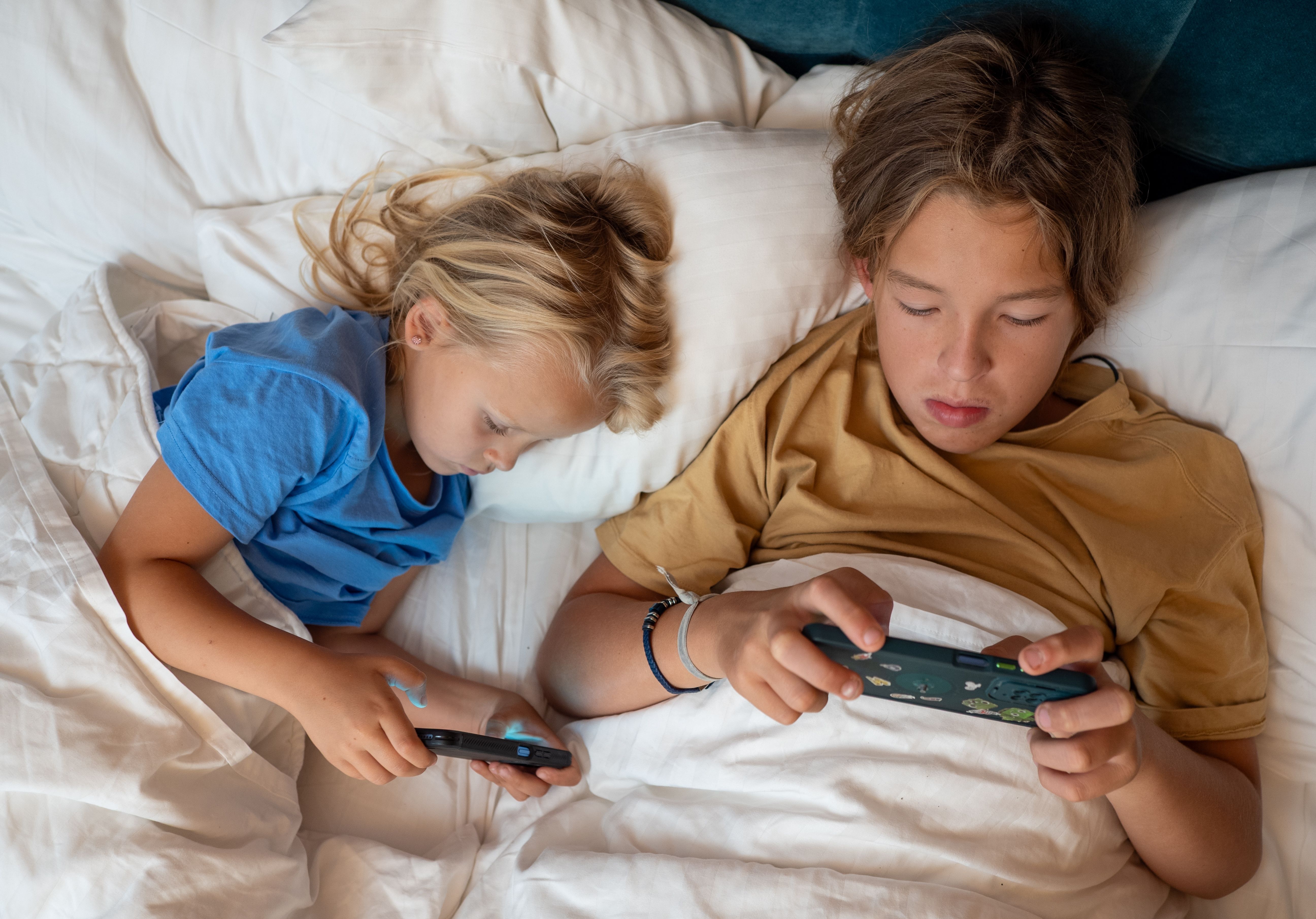
Eight in ten kids in the UK play video games. But "play" is doing a lot of work in that sentence.
New 2026 data shows that what happens inside gaming worlds is mostly social, creative and commercial — and the businesses that win will be the ones that treat games as places, not products.
Ask kids what they actually do in their favourite game and only 14% describe it as playing in the traditional sense. Almost as many, 12%, say they build things. Nearly one in ten, 9%, simply hang out with friends. The rest of the list reads like a portrait of a small economy: trading items, buying currency, sharing worlds, making games for other people to play.
81%
of kids aged 6 to 16 in the UK now game — but only 14% describe what they do as playing
Source: The Insights Family Survey. Kids UK, ages 6–16, January to July 2026 (n=4,076).
Reach is no longer the story. The story is that gaming has quietly stopped being a category. It is where friendship is maintained, identity is rehearsed, taste is formed and money is first spent. For entertainment, licensing, retail and technology businesses, that makes it less a media channel to buy into and more a culture to earn a place in.
Four forces define that culture right now.
1. Logging on to switch off
The most common reason kids give for gaming is not winning. It is relaxing.
Why kids in the UK play video games
Reasons given by kids aged 6 to 16
- Relaxing23%
- Socialising with friends20%
- Love of the characters18%
- Learning something15%
- Building a skill15%
- Competition13%
- Creating11%
- Self-expression11%
Source: The Insights Family Survey. Kids UK, ages 6–16, January to July 2026 (n=4,076).
These numbers describe a third place, not a sport: somewhere to be, not something to win. Games have absorbed the roles the park, the phone call and the bedroom floor once held, because they are the one environment where a child's entire friendship group is reliably present and something is always happening. Fortnite is not the favourite console game among kids in the UK (5%) because of its shooting mechanics. It is the venue where the after-school social lives of a generation now convene.
The commercial implication is a change of register. Brands tend to enter gaming as if entering an arena: loud, competitive, event-led. The data suggests they are actually entering a living room. Activations built around calm, belonging, character and self-expression are swimming with the current. Activations built purely around adrenaline are addressing a minority motivation and calling it the market.
2. The audience built the hit
Look at what kids love and a pattern emerges. Fortnite tops console favourites at 5%, ahead of Minecraft, Roblox, Call of Duty and FIFA. The five share almost nothing aesthetically. What they share is architecture: persistent worlds that update, remember you and give you tools.
Roblox takes the logic to its conclusion. The most played experiences on the platform — Adopt Me!, Brookhaven and Dress to Impress — were not made by Roblox at all. They were made by the audience. And the audience keeps making: 5% of kids build and share worlds with others, and 3% build games for other people to play. Those sound like small numbers until you translate them into population terms, at which point they describe hundreds of thousands of kids in the UK operating, in effect, as unpaid development studios.
11%
name IT and computing as their career aspiration, the single most named choice — ahead of doctor (7%) and engineer (6%)
Source: The Insights Family Survey. Kids UK, ages 6–16, January to July 2026 (n=4,101).
Making things in digital worlds is not a hobby this generation justifies. It is a future they are planning for. YouTuber sits at 3% and professional gamer at 2%.
For rights holders, this inverts the licensing playbook. The traditional model — handing a blockbuster IP to a AAA studio on a multi-year cycle — still works. But the parallel opportunity is to license the toolkit rather than the finished product: to put characters, assets and worlds into the hands of young creators and let the audience produce the next hit for you. The brands that will own the user-generated content era are the ones prepared to lose a little control to gain a lot of culture.
3. Worlds without walls
Console remains the centre of gravity, played on by 58% of kids and owned by 66%. But the smartphone (27%), PC (18%) and tablet (16%) are not fallback devices. They are extensions of the same session. Roblox is actually bigger as a smartphone favourite (5%) than a console one (4%): the world is the constant, the screen is incidental.
The economics are equally unsettled. Xbox Game Pass leads subscription services at 26%, ahead of PlayStation Plus Premium (21%) and Nintendo Switch Online (20%), with cloud-first services such as Amazon Luna (11%) and GeForce Now (5%) establishing a foothold. Yet 23% of kids use no subscription service at all. Three business models — subscription, outright purchase and free-to-play — are running simultaneously through the same audience.
The implication is blunt: any strategy anchored to one device or one payment model is voluntarily capping its reach. The planning unit is no longer the platform. It is the child's day, which starts on a bus, pauses in a friend's kitchen and ends in the living room, with the expectation that the world travels along.
4. The game is the flagship store
A favourite game in 2026 behaves less like a product and more like a high street. Around it, 35% of kids watch related content on YouTube, 30% on streaming platforms and 24% on standard TV, while 19% follow it on social media. The IP's centre of gravity may be the game, but most of the time spent with it happens somewhere else.
What kids own or want tied to their favourite game
Among kids aged 6 to 16 in the UK
- Toys and games28%
- Clothing and accessories25%
- Books and comics18%
- Beauty and toiletries13%
- Visited a live event or attraction9%
Source: The Insights Family Survey. Kids UK, ages 6–16, January to July 2026 (n=4,076).
That beauty figure deserves a second look: gaming IP is now a skincare and cosmetics category, a sentence that would have sounded absurd to most licensing teams until recently.
For entertainment companies, the lesson is sequencing. Merchandise, video content and live experience are not the reward for a successful game. They are load-bearing parts of how kids experience the IP from day one, and treating them as downstream extensions leaves both revenue and relevance on the table. The game is the anchor tenant. Everything else is the mall.
The price of entry
Kids are not hostile to brands in their worlds. When they encounter one in a game or on gaming social media, 26% tell friends or share a link, 23% say it makes the experience more enjoyable, and 16% want to create something with the brand. That last figure may be the most valuable in the whole study: a meaningful share of this audience responds to marketing by wanting to make things with you.
But receptivity is conditional. 19% say a brand encounter changes nothing, and that is the fate awaiting generic insertion. Meanwhile 35% of kids cite privacy as a concern and 31% worry about contact from strangers, which means the communities brands enter are ones kids are already navigating carefully. The entry fee is contribution: a cosmetic that belongs in the world's aesthetic, an event worth telling a friend about, a tool that lets a young builder make something new.
The question for 2026 is no longer how to reach kids through gaming. They are all already there, relaxing, building, trading and belonging. The question is what your brand is for once it arrives, and whether kids would notice if it left.
See what kids are playing, building and buying right now
We survey kids, parents and families across 22 markets every day, tracking the games, platforms, creators and products they engage with. If you are planning an activation, a licensing programme or a product range, we can show you where this audience actually is before you commit.
Let's chatCommon questions
How many kids in the UK play video games in 2026?
81% of kids aged 6 to 16 in the UK play video games, according to The Insights Family's 2026 Kids UK survey.
What is the most popular video game among kids in the UK?
Fortnite is the favourite console game among kids in the UK, ahead of Minecraft, Roblox, Call of Duty and FIFA.
Why do kids play video games?
The top reasons kids give are relaxation (23%), socialising with friends (20%) and love of characters (18%). Competition ranks below learning and skill-building.
Do kids want careers in gaming?
IT and computing is the most named career aspiration among kids in the UK at 11%, with YouTuber at 3% and professional gamer at 2%.
How should brands advertise in video games to kids?
The data favours contribution over placement: 26% of kids share brands they encounter in games with friends, but 19% say generic brand encounters change nothing. Activations that add to the world, such as native cosmetics, events and creation tools, outperform interruption.
Sources and references
The Insights Family Survey
- Kids UK, ages 6–16, January to July 2026 (n=4,076).
- Career aspiration figures: Kids UK, ages 6–16, January to July 2026 (n=4,101).
- We survey kids, parents and families across 22 markets, providing real-time market intelligence on their attitudes, behaviours and consumption habits.